Overview
Callback URL and Callback Request History are two different features in Platform Tools that serve different purposes. They are often confused, but understanding the difference is important for setting up and troubleshooting callbacks correctly.
TABLE OF CONTENTS
- Overview
- Key difference
- What is a Callback URL?
- What is Callback Request History?
- When should I use each feature?
Key difference
Feature | Purpose |
|---|---|
Callback URL | Used to configure where callbacks are sent |
Callback Request History | Used to view and troubleshoot callbacks that have already been sent |
What is a Callback URL?
Callback URL is where you define the endpoint that will receive callbacks from StraitsX.
Location: Platform Tools → Developer Tools → Callback URL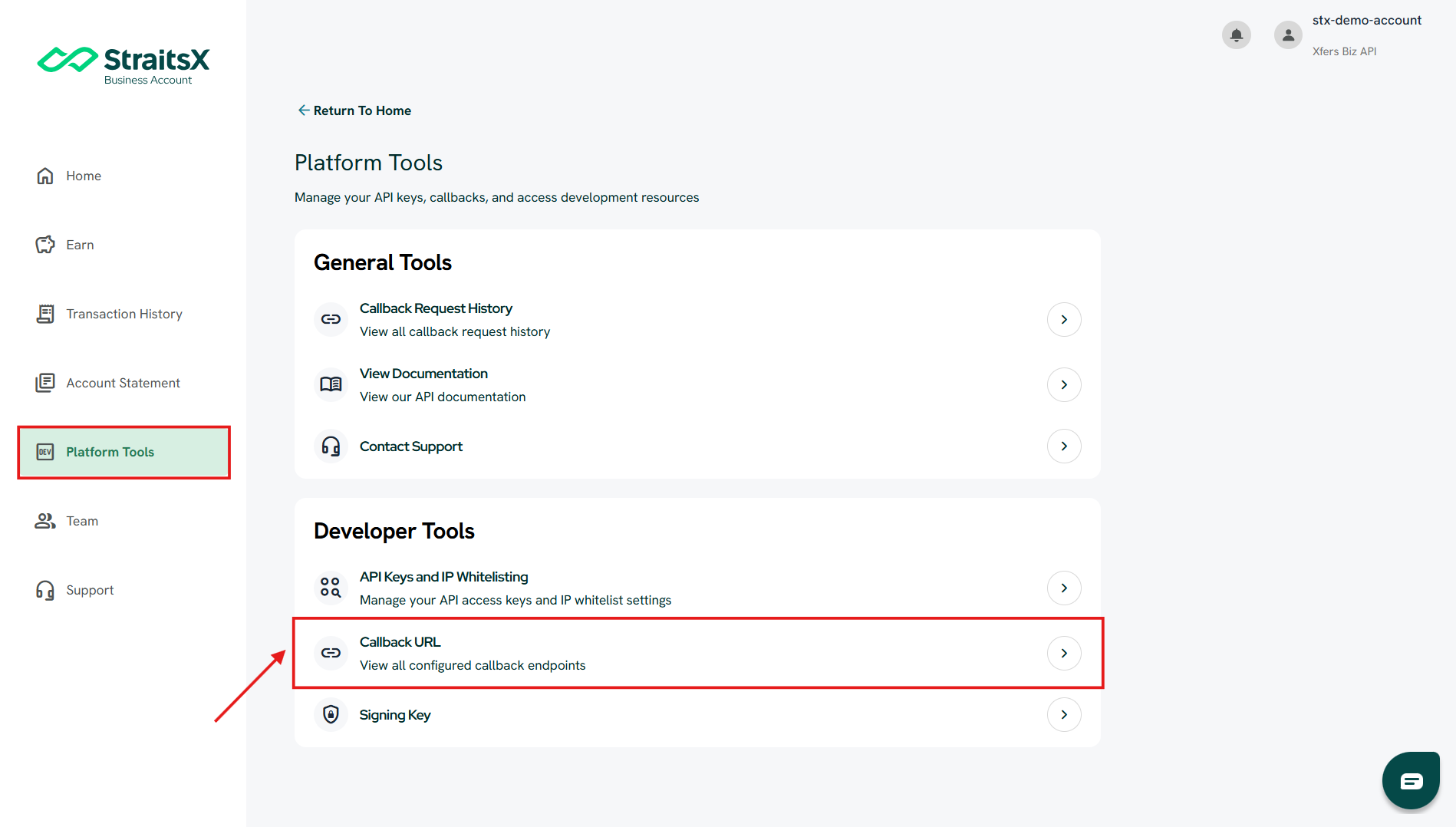
What you can do:
- Add or update your callback endpoint
- Configure URLs for different event types
- Choose between Client Event and End Customer Event
What is Callback Request History?
Callback Request History shows the list of callbacks that StraitsX has already sent.
Location: Platform Tools → General Tools → Callback Request History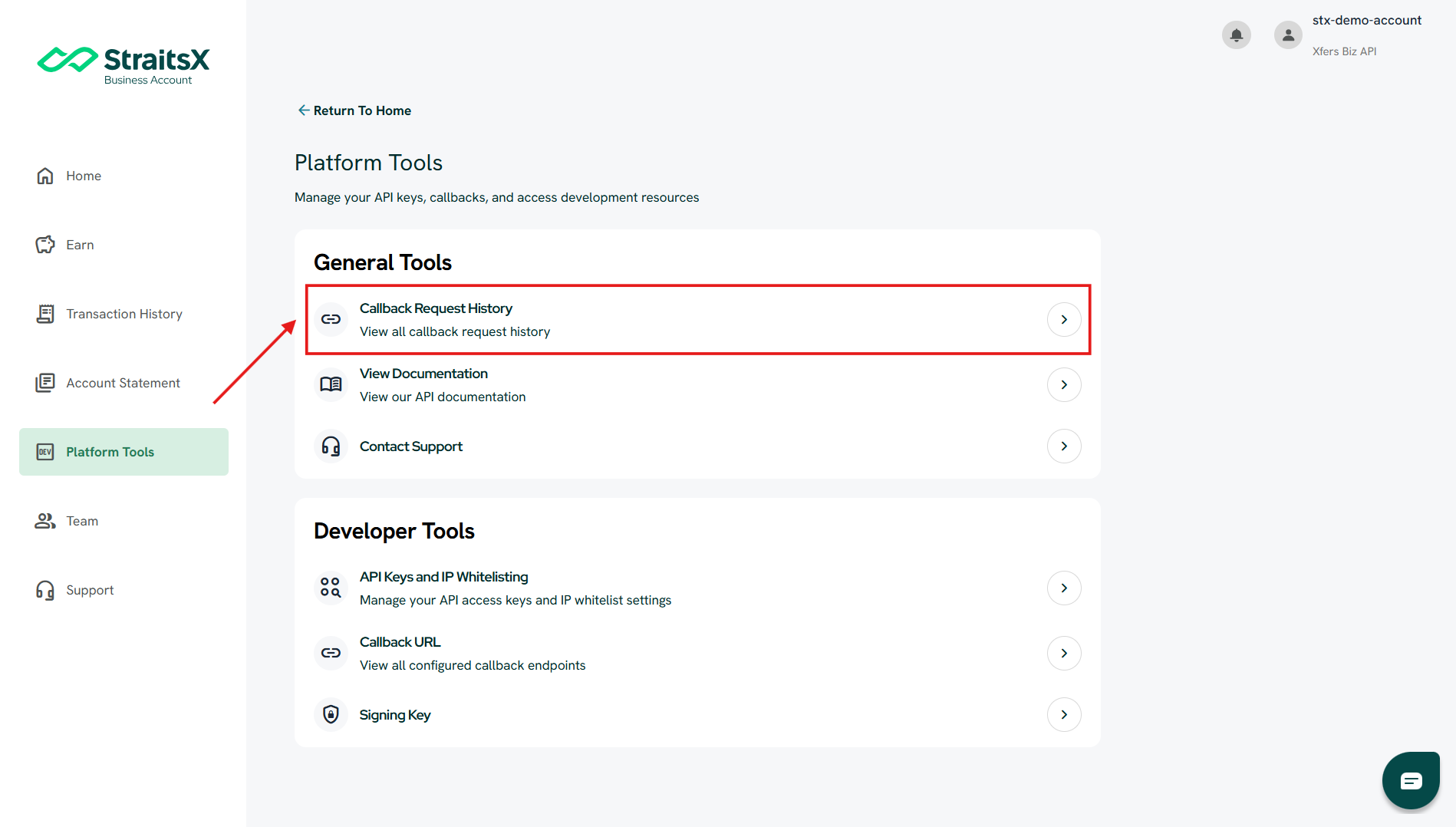
What you can do:
- View callback status (Success / Failed / Retrying)
- Check Client Response (e.g. 404 errors)
- Open callback details
- Resend failed callbacks
When should I use each feature?
Use the Callback URL when:
- You are setting up your integration
- You want to add or update your endpoint
- You are not receiving any callbacks
Use the Callback Request History when:
- You want to check if a callback was sent
- You want to troubleshoot a failed callback
- You want to resend a callback
Common confusion
“I am not receiving callbacks. Where should I check?”
You should check both:
- Callback URL
- Make sure your endpoint is configured
- Callback Request History
- Check if callbacks were sent and their status
Was this article helpful?
That’s Great!
Thank you for your feedback
Sorry! We couldn't be helpful
Thank you for your feedback
Feedback sent
We appreciate your effort and will try to fix the article